So, you’ve got a hole in your drywall. Maybe it’s from a doorknob, a playful kid, or that time you tried to hang a picture without a stud finder. Happens to the best of us, doesn't it? Now you’re staring at it, probably wondering if you can just slap a patch on it or if you need to go bigger. This is a common question I get from folks all over Provo, from the older homes in Joaquin to the newer builds up by Riverwoods.
When it comes to fixing drywall, you generally have two main routes: a targeted patch or replacing an entire section—sometimes even a full panel. Let’s talk about which one makes sense for different situations. We'll consider the cost, how long it’ll last, how it looks, and what kind of upkeep you might be signing up for.
The Quick Fix: Drywall Patching
A drywall patch is exactly what it sounds like. You cut out the damaged section and fit a new piece of drywall, or sometimes even use a specialized patch kit, into that specific spot. This is usually my go-to recommendation for smaller damage.
Cost & Time:
- Lower Material Cost: You’re buying a small piece of drywall or a patch kit, not a whole 4x8 sheet.
- Less Labor: It’s generally quicker to cut, fit, and mud a small patch. For a DIYer, this means less time spent learning new skills. For us, it means we can get in and out faster, which saves you money on labor.
Durability & Appearance:
- Good for Small Holes: If it’s a doorknob ding, a fist-sized hole, or even a medium-sized puncture, a patch can be very durable. If done right, it can be just as strong as the surrounding wall.
- Seamless Finish is Possible: With proper mudding, sanding, and painting, a good patch should blend in perfectly. The key here, of course, is proper feathering of the mud and matching your paint.
Maintenance:
Once it’s done, there’s not really any special maintenance. Treat it like the rest of your wall. The only time you might see an issue is if the original damage was caused by something structural, like a settling foundation. A patch won’t fix that; it’ll just cover it up temporarily.
When I Recommend Patching:
This is your best bet for holes up to about 12-18 inches in diameter. Think accidental punctures, small water damage spots (after the source is fixed, naturally), or minor cracks that aren't structural. It's efficient, cost-effective, and when done by someone who knows what they're doing (like us at Charis Drywall Solutions), it looks great.
The Bigger Job: Full Panel Replacement (or Large Section)
Sometimes, a patch just isn’t enough. If the damage is extensive, widespread, or involves structural issues, you might need to replace a larger section of drywall, or even a whole 4x8 panel.
Cost & Time:
- Higher Material Cost: You’re buying more drywall, more mud, more tape.
- More Labor Intensive: This is a bigger job. It involves cutting out a larger section, potentially dealing with studs, hanging a new, larger piece, and then the extensive mudding and sanding that comes with it. This means more time on site and a higher labor cost.
Durability & Appearance:
- Superior Long-Term Durability for Large Damage: If you have a huge section of water-damaged drywall, extensive mold, or a wall that’s been seriously compromised, replacing a large section or full panel is the only way to ensure the repair is sound and lasts. You’re essentially putting in a brand-new section of wall.
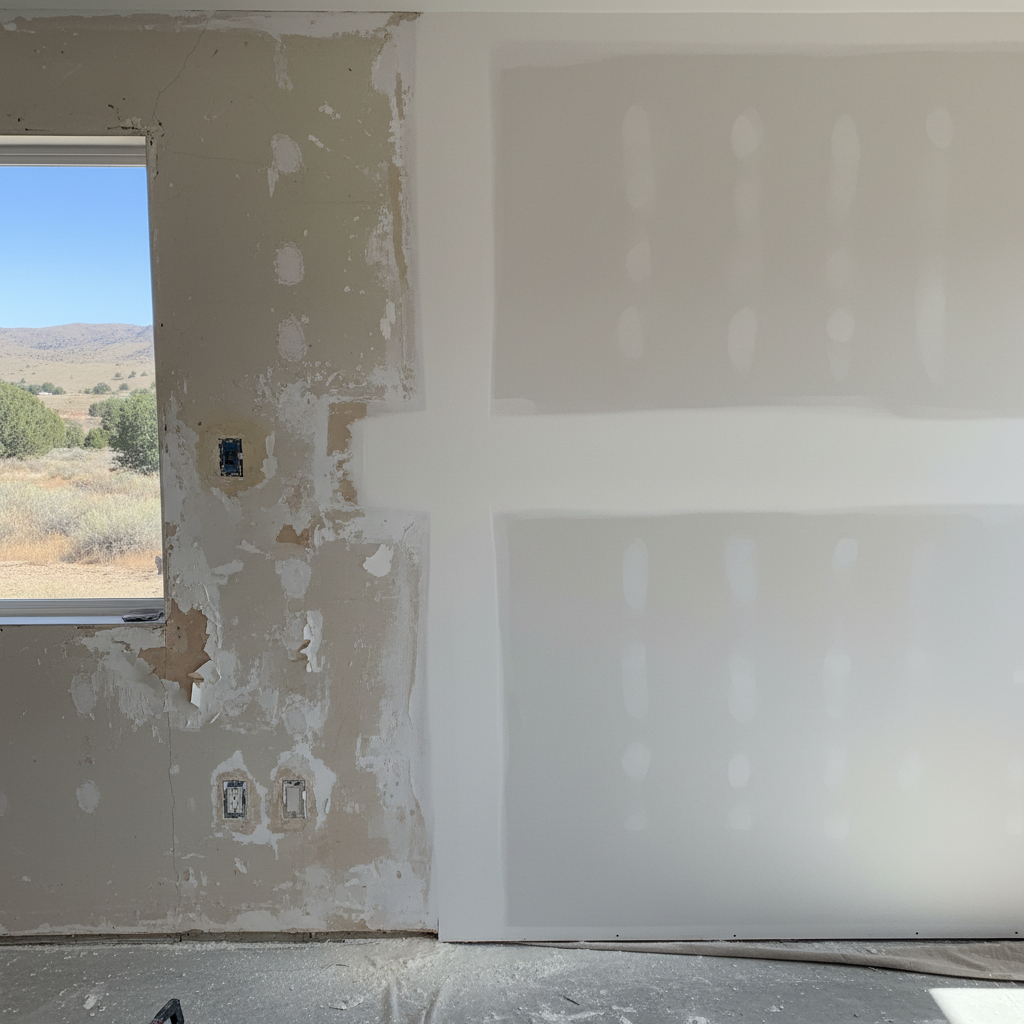
- Excellent Appearance (When Done Right): Just like with patching, a full panel replacement, when done by a skilled hand, should be indistinguishable from the original wall. The challenge here is making sure the new seams blend perfectly with the existing ones, which takes a lot of skill with taping and mudding.
Maintenance:
Again, once it’s done, it’s just part of your wall. The main thing here is that if you’re replacing a large section due to a recurring issue (like a leaky pipe), you need to make sure that underlying problem is fixed first. Otherwise, you’ll be doing this all over again.
When I Recommend Full Panel Replacement:
I push for this when the damage is extensive—say, over 18-24 inches, or if there are multiple smaller holes close together that make patching each one impractical. This also applies to widespread water damage (which we see a lot of after those spring snow melts and heavy rains here in Utah County), significant mold growth, or if the drywall has been compromised structurally. If you’re opening up a wall to do plumbing or electrical work, you’re almost always going to be replacing a larger section of drywall afterward.
My Recommendation for Provo Homeowners
Honestly, for the typical homeowner in Provo, if you’re dealing with a hole up to about 18 inches, a well-executed patch is usually the most economical and effective solution. It saves you money, time, and gets your wall looking good again without tearing half of it down.
However, don't try to patch a problem that's too big for it. If you've got widespread water damage, or a huge section that's crumbling, trying to patch that will just lead to frustration and a repair that won't hold up. That's when you need to bite the bullet and go for the larger replacement. It’s a bigger investment upfront, but it ensures a solid, long-lasting repair that you won’t have to worry about down the line.
The biggest takeaway? Don't underestimate the skill involved in making a drywall repair truly disappear. Whether it's a small patch or a whole panel, the finish work—the mudding, taping, and sanding—is what makes all the difference. If you’re not confident in your mudding skills, or if the damage is just too big for you to tackle, give us a call at Charis Drywall Solutions. We’ve been helping folks in Provo get their walls looking perfect for years, and we’d be happy to take a look at your project.